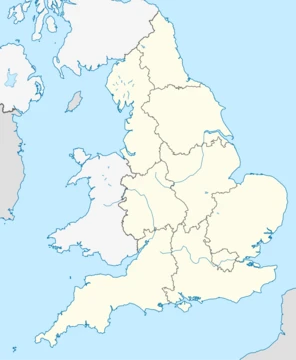
Middlesex
Historic English county, largely absorbed into Greater London.

Middlesex is one of the historic counties of England, second smallest after Rutland, with boundaries largely defined by the rivers Thames, Lea, and Colne, and a line of hills to the north. Its name derives from the Middle Saxons, and its former area now lies almost entirely within Greater London, with smaller parts in Hertfordshire and Surrey.
- type
- Historic county
- area_rank
- Second smallest of historic English counties
- origin
- Homeland of the Middle Saxons in the early Middle Ages
- boundaries
- Rivers Thames (south), Lea (east), Colne (west); hills to north
- key_divisions
- Six hundreds: Edmonton, Elthorne, Gore, Hounslow (Isleworth), Ossulstone, Spelthorne
Lore & Background
When county councils were introduced in 1889, about twenty per cent of the historic county's area and a third of its population were incorporated into the new administrative County of London. The remainder formed the administrative county of Middlesex, governed by Middlesex County Council.
Reader's Guide
Middlesex is significant as one of the historic counties of England, its name and boundaries reflecting early medieval Saxon settlement. Its gradual absorption into the expanding metropolis of London illustrates the challenges of urban growth and local government reform. The county's division into hundreds, the autonomy of the Tower Division, and the separate status of the City of London highlight the complex administrative history that preceded modern Greater London.
Did You Know?
- Middlesex is the second smallest of the historic counties of England, after Rutland.
- The county's name means 'territory of the middle Saxons', from Old English 'middel' and 'Seaxe'.
- The Tower Division (Tower Hamlets) had its own Lord Lieutenant, independent of the Lord Lieutenant of Middlesex.
- The seax, a type of knife, appears in the ceremonial emblems of both Middlesex and Essex.
Frequently Asked Questions
What defined Middlesex's borders?
The county was bounded by the River Thames to the south, the River Lea to the east, the River Colne to the west, and a line of hills to the north. This compact, river-and-hill-defined shape made it one of the most geographically constrained historic counties in England.
Where does the name 'Middlesex' come from?
The name identifies the territory as the home of the Middle Saxons, the Anglo-Saxon tribe that settled the area in the early Middle Ages. It is essentially a tribal-geographic label rather than a descriptive one.
What were Middlesex's internal divisions?
The county was split into six hundreds: Edmonton, Elthorne, Gore, Hounslow (also known as Isleworth), Ossulstone, and Spelthorne. These hundreds functioned as the primary administrative and judicial subdivisions within the county.
More in Regions Of England 1-18
Spotted an error? Know more?
This is a living reference — every entry is fact-audited, and reader corrections feed straight into our audit queue. Suggest an edit · See this site's audit record