Devon
Ceremonial county in South West England with two coastlines.

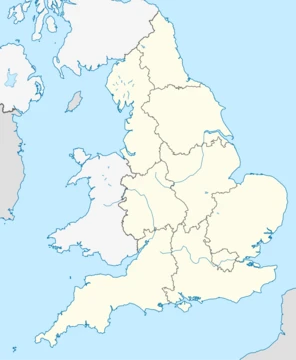
Devon is a ceremonial county in South West England, bordered by the Bristol Channel to the north, Somerset and Dorset to the east, the English Channel to the south, and Cornwall to the west. It is historically significant as the home of the Dumnonii Celtic Britons and as the namesake for the Devonian geologic period.
- largest_settlement
- Plymouth
- county_town
- Exeter
- geologic_period
- Devonian
- national_parks
- Dartmoor and part of Exmoor
Lore & Background
Devon derives its name from the Dumnonii, Brythons who inhabited the southwestern peninsula at the time of the Roman conquest. The name is thought to mean 'deep valley dwellers' from Proto-Celtic *dubnos 'deep'. In the Brittonic languages, Devon is known as Welsh: Dyfnaint, Breton: Devnent, and Cornish: Dewnens, each meaning 'deep valleys'. Devon has a varied geography, containing Dartmoor and part of Exmoor, two upland moors that are the source of most of its rivers, including the Taw, Dart, and Exe. The longest river is the Tamar, which forms most of the border with Cornwall. The southeast coast is part of the Jurassic Coast World Heritage Site, characterized by tall cliffs revealing Triassic, Jurassic, and Cretaceous geology.
Reader's Guide
Devon's significance lies in its role as a frontier between Brittonic and Anglo-Saxon Wessex, largely absorbed into Wessex by the mid ninth century. A genetic study found separate genetic groups in Cornwall and Devon, with a division almost exactly following the modern county boundary, suggesting limited Anglo-Saxon migration into Devon. The county has produced tin, copper, and other metals from ancient times, with Devon's tin miners enjoying independence through the Stannary Convocation dating back to the 12th century. Devon is the third largest county by area and has more mileage of road than any other county in England. Its two national parks, Dartmoor and Exmoor, and five national landscapes make it a popular holiday destination.
Did You Know?
- Devon is the only English county with two separate coastlines: on the Bristol Channel in the north, and on the English Channel in the south.
- The name Devon derives from the Dumnonii, meaning 'deep valley dwellers' from Proto-Celtic *dubnos 'deep'.
Devon and the West Country Identity
Devon sits within the informal cultural designation known as the West Country, a term frequently treated as synonymous with the ancient name Wessex. This overlap reflects how deeply the region's identity is rooted in pre-modern political geography rather than any single administrative boundary. The West Country grouping carries connotations stretching back to the Heptarchy era, when Wessex was one of the seven Anglo-Saxon kingdoms. However, the interchangeability is not absolute: in the Heptarchy context, Wessex is generally understood to cover the West Country minus Cornwall, suggesting Devon's relationship to this older identity is close but not exclusive. Devon also appears within the broader constellation of informal regional labels used across England—such as the Midlands, Yorkshire, the Home Counties, the Cotswolds, and the Three Counties—underscoring that no single scheme captures the full texture of how people relate to place. The West Country designation persists in everyday usage even as formal administrative categories have shifted around it, and Devon remains a core component of that enduring cultural geography.
Devon's Ancient Political Roots
Long before modern county lines were drawn, the territory now called Devon formed part of Dumnonia, a Brythonic kingdom occupying what is today the South West of England. This pre-Anglo-Saxon political entity represents one of the earliest known regional identities in the area. After the Roman withdrawal, the landscape was reorganized into the seven kingdoms of the Heptarchy—Northumbria, Mercia, East Anglia, Essex, Kent, Sussex, and Wessex—alongside smaller sub-kingdoms. These layered political histories mean Devon's regional identity carries echoes of Brythonic, Anglo-Saxon, and Norman administrative traditions simultaneously.
Devon in Modern Administrative Frameworks
In the contemporary landscape of English governance, Devon is consistently grouped within the South West region across multiple official schemes. When the Government Office Regions were established in 1994 and adopted for statistical purposes in 1999, Devon fell squarely within the South West grouping. The standard statistical regions that preceded the government office regions also placed Devon in the South West, maintaining continuity in how the area was measured and reported. The present government office regions closely mirror the Civil Defence Regions used during the Cold War, when the United Kingdom was divided into eleven numbered regions, most subdivided into sub-regions. Devon's consistent placement across these successive schemes highlights the stability of its regional identity even as the surrounding administrative machinery was repeatedly restructured.
Devon in Thematic and Organizational Schemes
Beyond government and statistics, Devon appears in a variety of thematic and organizational regional frameworks serving different practical purposes. The National Trust, for example, maintains ten regional offices across England, and Devon is paired with Cornwall under a single office that forms part of the official South West region. This pairing distinguishes it from the Trust's separate Wessex office, which covers the rest of South West England excluding Devon and Cornwall. The Britain in Bloom campaign, which divides England into twelve regions, blends government regions with altered names and includes Cumbria, a Thames-and-Chilterns grouping of Berkshire, Buckinghamshire, and Oxfordshire, and a combined South-and-South-West area encompassing Devon. Postcode areas also serve as informal geographic markers in some statistical contexts, though Devon is not specifically singled out among the examples provided. These overlapping schemes—charitable, horticultural, postal—demonstrate that Devon's regional identity is not fixed to a single administrative definition but is instead negotiated across multiple institutional frameworks, each with its own logic for drawing boundaries.
Frequently Asked Questions
Who is Devon?
Devon is a ceremonial county in South West England, with Exeter serving as its county town and Plymouth as its largest settlement. It is one of the few English counties that enjoys two separate coastlines, facing both the Bristol Channel and the English Channel.
What are Devon's powers/role?
Devon hosts two national parks within its borders—Dartmoor and part of Exmoor—giving it a notably large protected-landscape footprint. It also lends its name to the Devonian geologic period, a distinction no other English county shares.
Where does Devon live?
Devon sits at the southwestern tip of the English mainland, bordered by Somerset and Dorset to the east, Cornwall to the west, the Bristol Channel to the north, and the English Channel to the south.
Why is Devon important?
Devon is the historic homeland of the Dumnonii, a Celtic Briton tribe, and its name was later adopted to label an entire geologic period. These two legacies place it at the intersection of British prehistory and Earth-science nomenclature.
More in Regions Of England 1-18
Spotted an error? Know more?
This is a living reference — every entry is fact-audited, and reader corrections feed straight into our audit queue. Suggest an edit · See this site's audit record