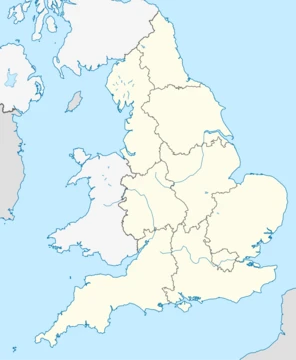
Hampshire
Ceremonial county in South East England with ancient and military heritage.

Hampshire is a ceremonial county in South East England, abbreviated to Hants. It has been continuously occupied since the end of the last Ice Age and played a crucial military role in 20th-century conflicts due to its ports. The county was a departure point for colonists who settled in North America during the 17th century, giving their new home the name New Hampshire.
- largest_settlement
- Southampton
- historic_county_town
- Winchester (Venta Belgarum)
- notable_for
- Roman and medieval ports, New Forest, military role in World Wars
Lore & Background
Hampshire's recorded history dates to Roman Britain, when its chief town was Venta Belgarum (now Winchester). The county was recorded in Domesday Book as divided into 44 hundreds. From the 12th century, ports grew due to trade in wool, cloth, fishing, and shipbuilding, and by the 16th century Southampton had become more populous than Winchester. In the 20th century, Hampshire played a crucial military role because of its ports. The Saxon settlement at Southampton was known as Hamtun, and the surrounding area as Hamtunscīr. The Domesday Book records the old name as Hantescire, from which the modern abbreviation 'Hants' derives. During the 17th century, Hampshire was a departure point for colonists who settled on the east coast of North America, naming the land New Hampshire in honour of their original homeland. The county's landscape includes undulating hills, a belt of chalk, and the New Forest, one of the largest expanses of ancient woodland remaining in England.
Reader's Guide
Hampshire's significance lies in its long history of settlement, trade, and military importance. The county was a key Roman administrative centre, with Venta Belgarum (Winchester) as its capital. Its ports, especially Southampton and Portsmouth, grew from the 12th century onward through wool, cloth, fishing, and shipbuilding, making Southampton more populous than Winchester by the 16th century. In the 20th century, these same ports gave Hampshire a crucial role in both World War I and World War II. The county also contributed to the colonization of North America, with settlers naming New Hampshire after their homeland. The New Forest, a large expanse of ancient woodland, and well-preserved Roman forts like Portchester Castle (Portus Adurni) add to its historical and natural legacy. The county's name, abbreviated as Hants, derives from the Domesday spelling Hantescire.
Did You Know?
- Hampshire is abbreviated to Hants, derived from the Domesday Book spelling Hantescire.
- The county was a departure point for 17th-century colonists who named New Hampshire after it.
- Portchester Castle in Hampshire contains the best-preserved Roman fort north of the Alps, with a Norman keep added later.
- The New Forest in Hampshire is one of the largest expanses of ancient woodland remaining in England.
Hampshire in the South East Economic Planning Region
Hampshire was grouped within the South East region alongside Bedfordshire, Berkshire, Buckinghamshire, Essex, Greater London, Kent, Oxfordshire, Hertfordshire, Surrey, and Sussex. This grouping represented one of several overlapping regional schemes that have been used to describe and administer areas of England over the centuries. The South East designation placed Hampshire within a cluster of counties that shared economic and administrative functions under this particular framework. Since the creation of Government Office Regions in 1994 and their adoption for statistical purposes in 1999, some of these earlier regional schemes have become obsolete, though many alternative designations continue to be widely used in everyday language and institutional practice. Hampshire's inclusion in the South East grouping thus reflects one moment in a long history of how England has been divided and redivided for planning, governance, and statistical purposes.
Hampshire and the National Trust's Thames and Solent Region
The National Trust maintains ten regional offices across England, and Hampshire falls under the jurisdiction of one of these: the Thames and Solent region. This office covers a distinctive grouping of areas—Berkshire, Buckinghamshire, London, Oxfordshire, and Hampshire—creating a cluster that spans from the capital city out into the surrounding counties. The name suggests a geographic logic tying these areas together, though the broader facts do not elaborate further on the naming rationale. This regional office structure sits alongside other National Trust divisions such as Devon and Cornwall (part of the official South West region), East of England, East Midlands, North East England (covering both North East England and Yorkshire and the Humber), North West England, South East England (encompassing East Sussex, Kent, Surrey, and West Sussex), West Midlands, and Wessex (defined as South West England without Devon and Cornwall). Hampshire's placement in the Thames and Solent grouping rather than the South East England office highlights how institutional boundaries can differ from the broader governmental regional schemes.
Hampshire in the Statistical and Planning Landscape
Before the Government Office Regions were adopted for statistical purposes in 1999, England relied on eight standard statistical regions. Hampshire was classified within the South East region, which at that time also included Greater London, Bedfordshire, Essex, and Hertfordshire in addition to the counties that make up the current South East. This statistical framework was one of several overlapping schemes used to describe and measure different parts of England. The standard statistical regions included North (comprising the current North East plus Cumbria), North West (the current North West less Cumbria), Yorkshire and Humberside, West Midlands, East Midlands, East Anglia (Norfolk, Suffolk, and Cambridgeshire), South West, and South East. Since 1994, when Government Office Regions were created, and their subsequent adoption for statistics in 1999, some of these earlier schemes have become obsolete. Nevertheless, many alternative regional designations continue to be widely used, meaning that Hampshire's statistical identity has shifted over time depending on which framework is in use.
Hampshire in the Tapestry of England's Regional Identity
England has never been defined by a single, fixed set of regional boundaries. Informal and overlapping designations such as the Midlands, the Black Country, the Welsh Marches, the Staffordshire Potteries, the Three Counties, Northern England, the Scottish Marches, Yorkshire, Southern England, the Hundred Parishes, the Home Counties, the M4 corridor, the Thames Valley, the Cinque Ports, the West Country, the Cotswolds, and the Weald all coexist alongside formal administrative divisions. Hampshire, while not singled out as its own cultural region in these informal lists, exists within a landscape where multiple overlapping schemes are simultaneously in play. Hampshire's position within the South East planning and statistical regions, and within the National Trust's Thames and Solent grouping, represents just the latest layer in a centuries-long tradition of dividing and redividing the English landscape for governance, culture, and identity.
Frequently Asked Questions
Who is Hampshire?
Hampshire is a ceremonial county in South East England that locals affectionately shorten to "Hants." Its historic county town is Winchester (the old Roman Venta Belgarum), while Southampton holds the title of largest settlement.
What are Hampshire's powers/role?
The county has repeatedly served as a vital military staging ground in twentieth-century wars, thanks to its deep-water ports and coastal position. It also guards the New Forest, one of England's last great tracts of ancient woodland.
How old is Hampshire?
People have occupied the land without interruption since the close of the last Ice Age, making it one of the longest-settled stretches in the country. Roman and medieval trading ports such as Southampton and Winchester layered centuries of commerce on top of that early habitation.
What is Hampshire's connection to North America?
Seventeenth-century colonists sailed out of Hampshire's harbours to establish settlements in New England and named their new home New Hampshire after their English county of origin. That transatlantic naming link still features prominently in the county's identity.
More in Regions Of England 1-18
Spotted an error? Know more?
This is a living reference — every entry is fact-audited, and reader corrections feed straight into our audit queue. Suggest an edit · See this site's audit record