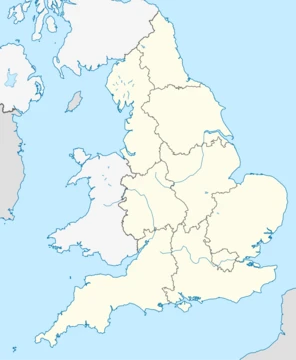
Kent
Historic county at England's gateway to mainland Europe.

Kent is a ceremonial county in South East England, bordered by Essex across the Thames Estuary to the north, the Strait of Dover to the south-east, East Sussex to the south-west, Surrey to the west, and Greater London to the north-west. Kent's location between London and the Strait of Dover, the narrowest crossing point between England and mainland Europe, has made it a point of entry for many prominent figures and groups in British history, including Germanic tribes after the Roman withdrawal and Saint Augustine in the 6th century.
- nickname
- the Garden of England
- motto
- Invicta (meaning 'undefeated' or 'unconquered')
- oldest_recorded_name
- Kantion (c. 320s BC, by Pytheas)
Lore & Background
The name Kent is of Celtic origin, first recorded in a periplus by Pytheas around the 320s BC, making it one of the oldest place names in the British Isles still in use. Its meaning has been explained as 'coastal district', 'corner-land', or 'land on the edge'. In Latin sources it was called Cantia or Cantium, and the Anglo-Saxons referred to it as Cent, Cent lond, or Centrīċe. The area was first occupied by early humans during the Palaeolithic, with a Neanderthal skull found at Swanscombe, and later saw Neolithic megaliths, Bronze Age, Celtic Iron Age, and Romano-British occupation.
Reader's Guide
Kent's significance stems from its strategic position between London and the Strait of Dover, serving as the primary entry point for invading forces, missionaries, and trade. It was one of the first British territories settled by Germanic tribes after the Romans, notably the Jutes, and became a Jutish kingdom. Saint Augustine's landing in the 6th century to convert England to Christianity established Canterbury as the centre of English Christianity, with Canterbury Cathedral now a World Heritage Site. The county's ports, including the Cinque Ports (10th–14th centuries) and Chatham Dockyard (16th–20th centuries), supplied warships for England. Dover Castle was described as the 'key of England' due to its strategic importance. Kent's geography, featuring the North Downs, the Weald, and Romney Marsh, supports fruit orchards, earning it the nickname 'the Garden of England'. The county's motto 'Invicta' ('undefeated') originated after the Norman Conquest, when Kent negotiated favourable terms with William the Conqueror.
Did You Know?
- Kent's name is first recorded in a periplus by Pytheas around the 320s BC, making it one of the oldest place names in the British Isles still in use.
- The county's motto 'Invicta' means 'undefeated' or 'unconquered', adopted after the Norman Conquest when William the Conqueror could not subdue the county.
- The Medway megaliths were built during the Neolithic era, and a Neanderthal skull was found in quarries at Swanscombe.
Frequently Asked Questions
Why is Kent called the 'Garden of England'?
The nickname reflects the county's centuries-old tradition of fruit, vegetable, and hop cultivation, supported by its mild coastal climate and fertile soils. Orchards and market gardens have defined the local landscape and economy for generations.
What does Kent's motto 'Invicta' mean and why is it associated with the county?
'Invicta' translates as 'undefeated' or 'unconquered,' a nod to Kent's reputation for withstanding repeated invasion attempts throughout the medieval period. The phrase has become a badge of local pride, often linked to the county's resistance against Viking and Norman forces.
Why is Kent's position at the Strait of Dover historically important?
Sitting at the narrowest crossing between England and mainland Europe, Kent served as the natural landing point for migrating Germanic tribes after the Roman withdrawal and for figures like Saint Augustine in the 6th century. Its gateway role shaped waves of cultural, military, and religious influence on the rest of England.
What is the oldest known name for Kent?
The earliest surviving reference comes from the Greek geographer Pytheas in the 320s BC, who recorded the region as 'Kantion.' This designation predates the familiar Anglo-Saxon name 'Kent' by several centuries.
More in Regions Of England 1-18
Spotted an error? Know more?
This is a living reference — every entry is fact-audited, and reader corrections feed straight into our audit queue. Suggest an edit · See this site's audit record