Essex
Ceremonial county in South East England with ancient woodland and long coastline.

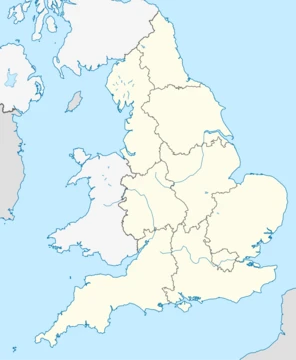
Essex is a ceremonial county in South East England, bordered by Cambridgeshire and Suffolk to the north, the North Sea to the east, Kent across the Thames Estuary to the south, Greater London to the south-west, and Hertfordshire to the west. Its largest settlement is Southend-on-Sea. Historically, Essex evolved from the Kingdom of the East Saxons, a polity rooted in the territory of the Iron Age Trinovantes tribe, and its history includes Roman conquest, Saxon and Viking invasions, and involvement in the Peasants' Revolt.
- largest_settlement
- Southend-on-Sea
- oldest_recorded_town
- Colchester
- county_status
- Ceremonial county
- historical_origin
- Kingdom of the East Saxons
Lore & Background
In the Iron Age, Essex and parts of southern Suffolk were controlled by the Trinovantes tribe, who produced their own coinage and had their capital at Colchester, Britain's oldest recorded town. The tribe was in conflict with the Catuvellauni and by AD 10 had come under their control. The Roman invasion of AD 43 began with a landing on the south coast, and the combined army took Colchester. Colchester became a Roman Colonia, initially the most important city in Roman Britain, with a temple to the God-Emperor Claudius. The Trinovantes joined the Iceni in the Boudiccan revolt, destroying Colchester and massacring many thousands; a Roman force attempting to relieve the city was destroyed in the Massacre of the Ninth Legion. Boudicca was defeated, and Essex likely suffered greatly.
Reader's Guide
Essex's significance lies in its deep historical roots, from the Iron Age Trinovantes tribe to the Roman conquest and the Boudiccan revolt, which shaped early British history. The county was the core of the Kingdom of the East Saxons in the Early Middle Ages, and its name derives from the Old English Ēastseaxe ('East Saxons'). The region saw Viking invasions, including the Battle of Maldon and the first Danegeld extracted from King Æthelred. In the nineteenth century, railways allowed coastal resorts like Clacton-on-Sea to develop and the Port of London to shift downriver to Tilbury. Subsequent development included new towns such as Basildon and Harlow, the Harwich International Port, and the petroleum industry.
Did You Know?
- Colchester is the oldest recorded town in Britain.
- The name Essex comes from the Old English Ēastseaxe, meaning 'East Saxons'.
- The Trinovantes tribe produced their own coinage in the Iron Age.
Anglo-Saxon Kingdom
After the Roman occupation of Britain ended, the territory that would become England was split into seven Anglo-Saxon kingdoms. Essex was one of these seven, alongside Northumbria, Mercia, East Anglia, Kent, Sussex, and Wessex. A number of smaller political divisions and sub-kingdoms also existed during this period. The seven kingdoms were not permanent entities; they were gradually drawn together into a single Kingdom of England. Essex, as a founding kingdom of the Heptarchy, represents one of the earliest political identities of the English landscape, predating the county system that would later define its administrative boundaries.
Shared Governance with Hertfordshire
This was part of a broader pattern in post-Conquest England where neighboring counties were paired under one sheriff for varying periods. This period of joint administration preceded the later administrative reforms that would separate county governance. The fact that Essex was grouped with Hertfordshire rather than with other adjacent areas reflects the particular political and territorial logic of the medieval period, where county boundaries and administrative groupings did not always align neatly with geographic or cultural identities.
Modern Statistical and Planning Roles
Essex was placed within the South East region, which also encompassed Bedfordshire, Berkshire, Buckinghamshire, Greater London, Hampshire, Kent, Oxfordshire, Hertfordshire, Surrey, and Sussex. This grouping was later echoed in the system of eight standard statistical regions used before the Government Office Regions were created in 1994 and adopted for statistical purposes in 1999. In those standard statistical regions, the South East included Essex alongside Greater London, Bedfordshire, and Hertfordshire. The creation of the Government Office Regions in 1994 rendered some earlier regional schemes obsolete, yet many alternative designations continued to be widely used. Essex's placement in the South East across multiple successive frameworks illustrates how the county has been consistently grouped with its neighbors in the broader southeastern part of England for both economic planning and statistical reporting purposes.
Within the Patchwork of English Regions
England's regional identity is far from singular. Since the Government Office Regions were established in 1994 and adopted for statistics in 1999, a complex web of overlapping designations has persisted. Informal cultural regions such as the Home Counties, the M4 corridor, and the Thames Valley continue to be widely used, often overlapping with formal boundaries. The National Trust maintains ten regional offices in England, while Britain in Bloom divides the country into twelve regions that blend government designations with altered names. Postcode areas also serve as informal geographic markers, with some areas like the LA postcode covering Morecambe Bay or PE representing The Fens. Essex sits within this layered landscape of regional identities, belonging to multiple overlapping schemes simultaneously. The Heptarchy names—Wessex, East Anglia, Mercia, Northumbria—continue to be recognized by organizations as regions, and county names like Sussex and Yorkshire retain cultural weight. For Essex, this means its identity is shaped not by one single regional label but by its position within this dense, multi-layered tapestry of English regional designations.
Frequently Asked Questions
Why is Essex important?
The county traces its political roots to the Kingdom of the East Saxons, which in turn occupied land once held by the Iron Age Trinovantes. Through Roman conquest, Viking raids, and the Peasants' Revolt, Essex accumulated a deep stratigraphy of English history.
What is Essex's largest settlement?
Southend-on-Sea is the biggest town in the county. Colchester holds a separate distinction as the oldest recorded settlement within Essex's borders.
More in Regions Of England 1-18
Spotted an error? Know more?
This is a living reference — every entry is fact-audited, and reader corrections feed straight into our audit queue. Suggest an edit · See this site's audit record