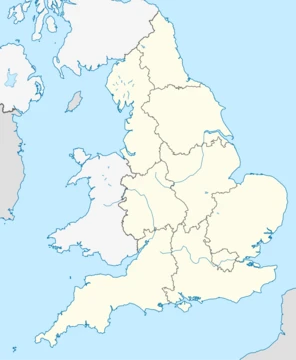
East Sussex
Ceremonial county in south-east England, part of the historic county of Sussex.

via Wikipedia: Sussex and Brighton Strategic Authority · see source
East Sussex is a ceremonial county in south-east England. It is part of the historic county of Sussex, which was formed in the 5th century as the Kingdom of Sussex. In 1974, Sussex lost its status as a ceremonial county and separate posts of Lord Lieutenant were established for East and West Sussex. East Sussex is one of the three top-level authorities that are constituent members of the Sussex and Brighton Strategic Authority (SBSA), alongside West Sussex and Brighton and Hove. The SBSA, a strategic authority and combined county authority covering the historic county of Sussex, was established on 26 March 2026.
- ceremonial_county
- East Sussex
Verified Timeline
Lore & Background
East Sussex is rooted in the historic county of Sussex, which was formed in the 5th century as the Kingdom of Sussex in a region largely inhabited by the Romano-British Regni tribe. By the 12th century, Sussex was administered as several districts known as Rapes. In the 1890s, although considered a single county, separate county councils for east and west, as well as independent county boroughs for its larger towns, were established within it. In 1974, Sussex lost its status as a ceremonial county and separate posts of Lord Lieutenant were established for East and West Sussex. Sussex continues to be recognised as a single county or region for many purposes, and in the 21st century a county day and a flag were established. Cultural historian Peter Brandon referred to the current division of Sussex into east and west as 'unnatural'. The post of Sussex Police and Crime Commissioner was established in 2012. In 2014, the Greater Brighton Economic Board was established to deliver strategic economic improvements across central parts of the region. A 2024 report for the Institute for Government recommended a single mayor for the Sussex region on the grounds of its economic geography, cultural identity and existing administrations, such as Sussex Police.
Reader's Guide
East Sussex is one of the three constituent local authorities of the Sussex and Brighton Strategic Authority (SBSA), which was established on 26 March 2026. The SBSA covers the historic county of Sussex and its creation is linked to the English Devolution and Community Empowerment Act 2026, first outlined in a white paper in 2024 by the Starmer ministry. The SBSA will have a directly elected mayor who will be a member of the Mayoral Council for England and the Council of the Nations and Regions. The first mayoral election is scheduled for May 2028. The authority's name, the Sussex and Brighton Combined County Authority, alludes to the three top-level authorities at its establishment: East Sussex, West Sussex, and Brighton and Hove. The name has been criticised as clumsy, with calls from both East and West Sussex county councils for the name to simply be 'Sussex'. Upon launch, the authority adopted the corporate name Sussex and Brighton Strategic Authority.
Did You Know?
- East Sussex is one of the three top-level authorities that are constituent members of the Sussex and Brighton Strategic Authority (SBSA), established on 26 March 2026.
- The SBSA's creation is linked to the English Devolution and Community Empowerment Act 2026, first outlined in a white paper in 2024 by the Starmer ministry.
- The first mayoral election for the SBSA is scheduled for May 2028.
- The name 'Sussex and Brighton Combined County Authority' alludes to the three top-level authorities at its establishment: East Sussex, West Sussex, and Brighton and Hove.
- Both East and West Sussex county councils have called for the authority's name to simply be 'Sussex'.
The Kingdom of Sussex and the Forging of England
Long before the modern administrative map of England took shape, the territory that now includes East Sussex formed part of one of the seven great Anglo-Saxon kingdoms. Following the withdrawal of Roman authority, the land was divided among Northumbria, Mercia, East Anglia, Essex, Kent, Sussex, and Wessex, with numerous smaller political entities and sub-kingdoms also asserting their own authority. Sussex stood among these foundational polities, a distinct political identity that would endure for centuries. Even after that consolidation, the name Sussex persisted as a recognised county designation, and the broader Heptarchy framework continued to be referenced by organisations as a way of describing regional identity. For East Sussex, this deep-rooted heritage as part of the ancient kingdom of Sussex remains a thread connecting the modern landscape to its earliest political origins.
Shared Governance and the Long Sheriff Arrangement
For over three centuries, the governance of Sussex was inextricably linked to that of its neighbour Surrey. This was not an isolated case across England. Essex and Hertfordshire, Leicestershire and Warwickshire, Somerset and Dorset, and Berkshire and Oxfordshire all followed similar patterns. For the people of East Sussex, this long period of shared administration meant that the county's identity was shaped not in isolation but in dialogue with neighbouring territories, a legacy that would echo through later regional groupings well into the modern era.
Modern Regional Frameworks and Institutional Groupings
Since the mid-twentieth century, East Sussex has been repeatedly slotted into shifting administrative and statistical frameworks that reflect the evolving needs of governance. The National Trust, operating ten regional offices across England, groups East Sussex together with Kent, Surrey, and West Sussex under its South East England office. Other bodies take different approaches: Britain in Bloom divides the country into twelve regions with altered names, while postcodes sometimes serve as practical statistical alternatives where administrative borders do not align with geographic realities. For residents of East Sussex, the result is a patchwork of overlapping designations, each serving a different institutional purpose.
Cultural Landscapes and the Informal Identity of the County
Beyond the formal administrative boundaries that shift with each government reorganisation, East Sussex draws much of its cultural identity from informal, overlapping regional designations that have persisted for generations. The Weald, another informal cultural region, describes the wooded interior and connects East Sussex to a broader geographic identity shared with neighbouring areas. Unlike the rigid Government Office Regions or the National Trust's ten regional offices, these cultural labels are fluid, overlapping, and often interchangeable. They reflect how communities in East Sussex understand their place not through a single administrative box but through a layered tapestry of landscape, history, and local tradition.
Frequently Asked Questions
What is East Sussex?
East Sussex is a ceremonial county in South East England, blending coastal towns with open rural landscapes. It was established as an administrative county in 1889 and restructured into its current non-metropolitan and ceremonial form in 1974.
Where is East Sussex located and what borders it?
The county sits along the south coast, backed by the English Channel to the south and flanked by Kent to the north-east, West Sussex to the west, and Surrey to the north-west. It covers roughly 1,792 square kilometres of terrain.
What is the county town and largest settlement of East Sussex?
Lewes holds the title of county town, while the city of Brighton and Hove is by far the largest settlement in the area. As of 2024 the county is home to an estimated 844,752 people.
What is the highest point in East Sussex?
Ditchling Beacon, at 248 metres (814 feet) above sea level, is the county's highest point. It is a prominent landmark in the south-eastern part of the region.
What is East Sussex's historical origin?
The land was once part of the ancient kingdom of the South Saxons before being carved into the modern county structure. It gained formal administrative status in 1889 and assumed its present ceremonial and non-metropolitan shape in 1974.
More in Regions Of England 1-18
Spotted an error? Know more?
This is a living reference — every entry is fact-audited, and reader corrections feed straight into our audit queue. Suggest an edit · See this site's audit record