Herefordshire
Rural ceremonial county in the West Midlands of England.

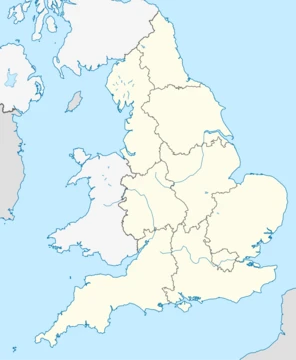
Herefordshire is a ceremonial county in the West Midlands of England, bordered by Shropshire, Worcestershire, Gloucestershire, and the Welsh counties of Monmouthshire and Powys. It is a rural area known for its agricultural land, fruit and cider production, and the Hereford cattle breed.
- Largest settlement
- Hereford
- Ceremonial county status
- Established by Lieutenancies Act 1997
- Unitary authority created
- 1 April 1998
Lore & Background
Herefordshire is one of the 39 historic counties of England. Herefordshire County Council was created in 1889. In 1974, the administrative county was merged with Worcestershire to form Hereford and Worcester, but the county was dissolved in 1998, resulting in the return of Herefordshire and Worcestershire as counties. The re-established border was almost identical to the pre-1974 boundary, except for a small area at Park Wood transferred to Worcestershire in 1986. The county is notably hilly, with the River Wye crossing its centre. The Malvern Hills and the Wye Valley are both designated Areas of Outstanding Natural Beauty. The Black Mountains range in the west contains the county's highest point. The land use is mostly agricultural, and the county is known for its fruit and cider production, as well as the Hereford cattle breed. Herefordshire is governed by Herefordshire Council, a unitary authority created in 1998. The county has two parliamentary constituencies: North Herefordshire and Hereford and South Herefordshire.
Reader's Guide
Herefordshire's significance lies in its role as a historic English county and its agricultural heritage, particularly in cider production and livestock breeding. The county is home to Bulmers Cider, the world's largest cider factory, and Weston's Cider, both major producers. The economy also includes manufacturing, such as Painter Brothers, the UK's largest manufacturer of electricity pylons, and Special Metals Wiggin, a major producer of nickel alloys. The county's population increased by 2.0% between 2011 and 2021, lower than the national average, with a predominantly White British demographic and a growing Eastern European migrant community. Gypsies and Travellers have historically been the largest minority ethnic group. Herefordshire's legacy includes its re-establishment as a unitary authority in 1998, preserving its borders and local governance.
Did You Know?
- Herefordshire is one of the 39 historic counties of England.
Geography & Natural Landscapes
Herefordshire occupies the West Midlands of England, ringed by Shropshire, Worcestershire, Gloucestershire, and the Welsh counties of Monmouthshire and Powys. Two Areas of Outstanding Natural Beauty anchor the landscape: the Wye Valley in the south, which extends into Wales, and the Malvern Hills in the east, straddling the Worcestershire boundary. The region's identity as part of the historic Welsh Marches permeates its cultural and physical character.
Administrative History & Governance
Herefordshire's governance has been reshaped by repeated structural reorganisation. As one of England's 39 historic counties, it received a dedicated County Council in 1889. In 1974, that administrative county was folded into the larger Hereford and Worcester non-metropolitan county, with its territory distributed across South Herefordshire, Hereford, and portions of the Malvern Hills and Leominster districts. That merged arrangement persisted until 1998, when Herefordshire was reconstituted as a unitary authority, consolidating county and district functions under a single council. The re-established borders were virtually identical to the pre-1974 boundary, save for one anomaly: a small area at Park Wood had been transferred to West Malvern in 1986 and therefore remained in Worcestershire. The Lieutenancies Act 1997 formally designated Herefordshire a ceremonial county coextensive with the unitary district. For Eurostat classification it holds NUTS 3 status (code UKG11) within the broader Herefordshire, Worcestershire and Warwickshire NUTS 2 region.
Economy & Industrial Heritage
Agriculture remains the economic backbone of Herefordshire, with the county particularly celebrated for its fruit and cider production and for the Hereford cattle breed. The industrial landscape is anchored by several major employers that give the rural county a distinctly heavy-engineering and food-production character. In the northern part of the city, Painter Brothers, a division of Balfour Beatty, stands as the United Kingdom's largest manufacturer of electricity pylons, broadcasting masts, the Callender-Hamilton bridge, and rail electrification structures. Directly adjacent, Special Metals Wiggin, part of Special Metals Corporation, served as Europe's principal producer of nickel alloys. Cargill Meat also maintains operations in the area. Together, these clusters set a distinctive economic profile against a predominantly pastoral landscape.
Demographics & Community
The demographic profile is predominantly White British at 91.1%, with 5.1% identifying as White Other. That latter group is largely composed of migrants from central and Eastern Europe who began arriving in the early 2000s, initially drawn by agricultural employment but increasingly working in health care, catering, and hospitality. Poland and Romania are the most common non-UK countries of birth among foreign-born residents. Historically, Gypsies and Travellers have constituted the county's largest minority ethnic group, comprising three main communities: Romanichal or Romani, Irish Travellers, and New Age Travellers. Romany Gypsies and Irish Travellers are recognised as a minority ethnic group under the Race Relations Amendment Act of 2000.
Frequently Asked Questions
What are Herefordshire's powers or role?
As a ceremonial county created under the Lieutenancies Act 1997, Herefordshire functions primarily as a local identity and governance region rather than a sovereign entity. Practical day-to-day administration is handled by a unitary authority that was set up on 1 April 1998.
Why is Herefordshire important?
The county is a significant agricultural zone, widely recognised for fruit cultivation, cider production, and the famous Hereford cattle breed. It also acts as a geographic and cultural bridge between the English Midlands and the Welsh border counties of Monmouthshire and Powys.
More in Regions Of England 1-18
Spotted an error? Know more?
This is a living reference — every entry is fact-audited, and reader corrections feed straight into our audit queue. Suggest an edit · See this site's audit record