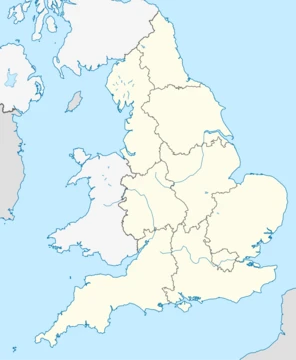
Lincolnshire
A rural English county with a quiet history and varied landscapes.

Lincolnshire is a ceremonial county in the East Midlands and Yorkshire and the Humber regions of England. The county is the second largest in England and has a varied geography, including the Fens, the Lincolnshire Wolds, and the Lincolnshire Edge. Historically, it was settled by the Angles, who established the Kingdom of Lindsey, and later became a prosperous wool-trading region. During the Second World War, its flat topography made it an important base for the Royal Air Force, earning it the nickname 'Bomber County'.
- Largest settlement
- Lincoln (city)
- Notable rivers
- Trent, Witham, Welland, Nene, Great Ouse
- County flower
- Not specified in source
Lore & Background
In pre-Roman times, most of Lincolnshire was inhabited by the Corieltauvi people, who spoke Common Brittonic. The Romans established the settlement of Lindum Colonia, from which the name Lincoln derives. After the Roman withdrawal, Germanic-speaking Angles settled the region, and the Kingdom of Lindsey was formed. The county later merged with the Danelaw borough of Stamford, and by the 11th-century Domesday Book, the entire county was called 'Lindsey'. It was divided into three Parts: Lindsey, Holland, and Kesteven, each with separate quarter sessions.
Reader's Guide
Lincolnshire's significance lies in its role as a largely rural county that avoided heavy industrialisation, preserving a landscape of Fens, Wolds, and marshland. Its history includes Roman settlement, Anglo-Saxon kingdom formation, and medieval prosperity from the wool trade, which funded grand churches like St Botolph's in Boston. The county's flat terrain made it a key base for the Royal Air Force during the Second World War, leading to its nickname 'Bomber County'. It is also the birthplace of Sir Isaac Newton, at Woolsthorpe Manor, and was shaken by a notable earthquake in 2008. The county's geography includes the Lincolnshire Wolds, designated a national landscape, and the Fens, a drained marshy region. Its borders include England's shortest county boundary, with Northamptonshire, measuring just 20 yards.
Did You Know?
- Lincolnshire is the second largest county in England by area.
- The county was shaken by an earthquake on 27 February 2008, reaching between 4.7 and 5.3 on the Richter scale.
- Sir Isaac Newton was born at Woolsthorpe Manor in Lincolnshire and attended The King's School, Grantham.
- The border between Lincolnshire and Northamptonshire is just 20 yards long, England's shortest county boundary.
Frequently Asked Questions
What are Lincolnshire's powers/role?
The county's flat, open terrain made it a critical Royal Air Force base during the Second World War, while its varied landscape spans the Fens, the Lincolnshire Wolds, and the Lincolnshire Edge. Historically it also served as a prosperous wool-trading heartland after the Angles established the Kingdom of Lindsey.
Why is Lincolnshire important?
As the second-largest county in England, it anchors a stretch of geography from the low-lying Fens up to the chalk ridges of the Wolds and Edge. Its strategic flatness during WWII and its medieval wool economy gave it outsized influence relative to its modest population.
More in Regions Of England 1-18
Spotted an error? Know more?
This is a living reference — every entry is fact-audited, and reader corrections feed straight into our audit queue. Suggest an edit · See this site's audit record